
It’s a good thing that a well-made brioche, eaten warm, has the advantage of appealing to everyone; because even those who don’t like pastries enjoy eating brioche thanks to its lightness, exquisite taste, and the softness given to it by butter, which fills the mouth with its freshness and nutty aroma. - Marie-Antoine Carême
“The little ones, and the very smallest ones still, Will have cramique and butter in Paradise, With fine violin music.” - Contes Flamands et Wallons (scènes de vies nationales) - Flemish and Walloon Tales (Scenes from National Life) by Camille Lemonnier 1873
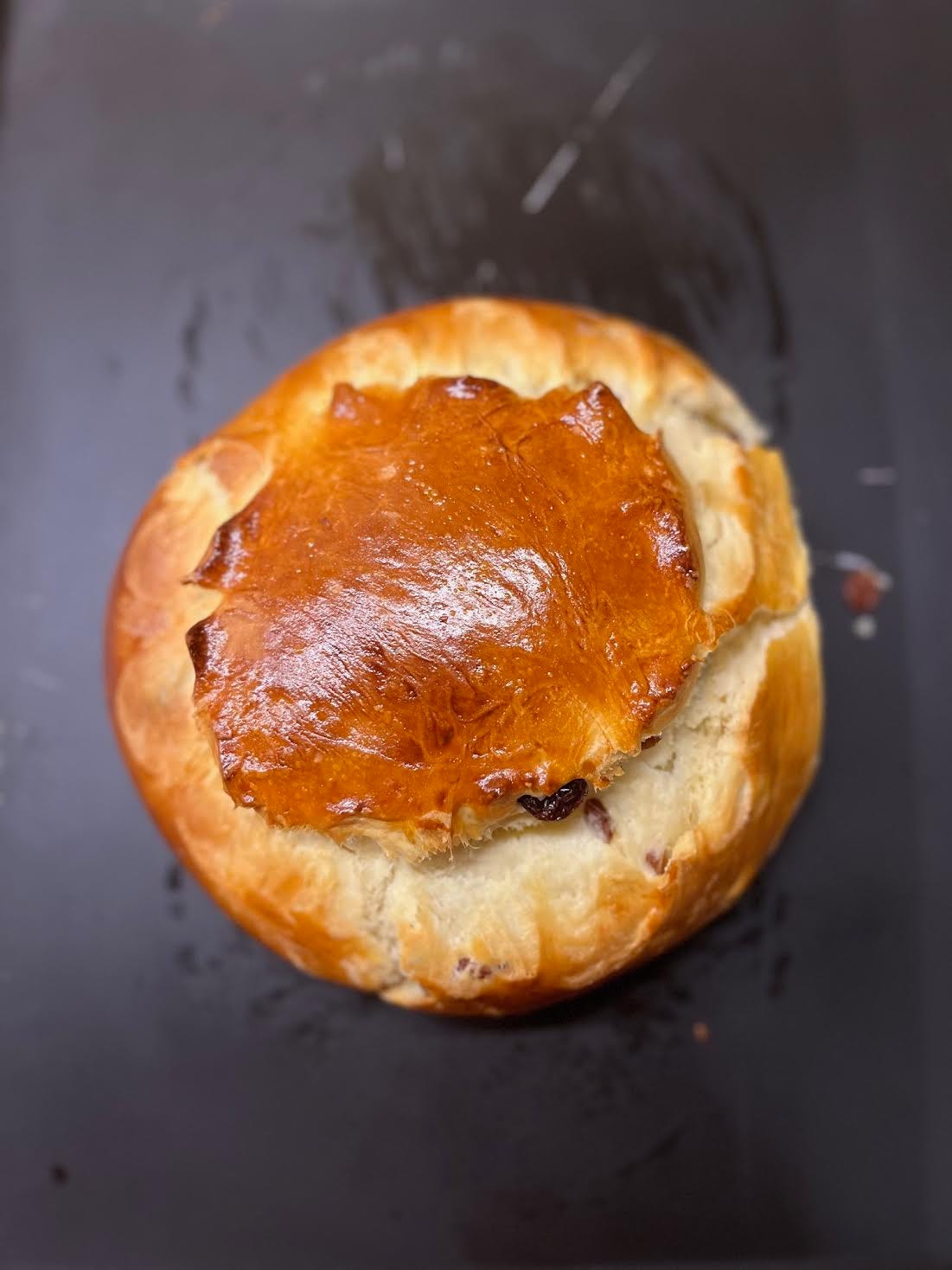
What a special food, indeed, if all the children — even the tiniest, even the poorest — will feast on cramique and butter to the sounds of beautiful music in Paradise, the very image of heaven. In Camille Lemonnier’s nineteenth-century Belgium, cramique was not just any bread; it was a rich, festive loaf, a light brioche made with white flour, eggs, butter, and sugar, dotted with sweet raisins. Eaten with butter — still more butter — it became even more luxurious. The author continues: “Eat, people — the animals too — sweet cakes and baked bread. Christmas! Christmas! Amen.” Cramique was a rare treat, reserved for special occasions: Christmas, saints’ days, and Epiphany, Three Kings’ Day.
“Cramique, well known in Brussels, is, by its origins, a word that belongs to the vocabulary of regional French.” As Albert Henry confirms in his 1960 Étude de Lexicologie Française et Gallo-Romane (Study of French and Gallo-Roman Lexicology), the cramique is most likely a Belgian confection, and is certainly widely found in that country today, much more so than in France, and yet, the word has a decidedly French ring to it. Some do claim “cramique” comes from the Flemish “kraammik” which comes from the Middle Dutch “cramicke,” while Germanists are perplexed when it comes to explaining the origin of the word, whose ancient forms are diverse and varied, spread out through their own language: cramic, credemicke, krickemicke, kermieken, kraemmicke, credemicken, each words for a sweet, enriched bread or cake. In fact, the Belgian Florimond Parent, in his 1891 Manuel de la Conversation, ou Recueil Complet des Locutions, states unequivocally about cramique: “This word is not French; say gâteau instead.”
Whether Flemish or French, cramique is, at its core and all the way to its crust, fundamentally a Belgian bread. But how can I, who writes about French foods, be discussing the cramique? When did this bread cross into French territory, and how did it become rooted in the culinary traditions of northern France, especially in regions bordering Belgium? Let’s get back to the name, the etymology of the term itself possible pointing to a French connection. Because I am determined to find one.
In the highly respected Revue Belge de Philologie et d’Histoire, historian Marie-Guy Boutier defines cramique as “a wheat bread, not a brioche, weighing between 500 and 800 grams, enriched with milk, butter, and sugar, and garnished with currants. As for the origin of the name,” he continued, “the most fanciful hypotheses circulate, starting with the one that claims that “cramique” comes from the (French) verb cramer (to burn).” - one could certainly see why people would think this as the loaf is baked until the crust is a deep golden brown. “Cramique is actually a deformation of cramiche, an Old French word that appears in 14th-century texts from Reims, and is thought to be a contraction of crème (cream) and miche (loaf). Originally, it was therefore a loaf made with cream.”
Well, in fact, we have access to some of those ancient texts. Frédéric Godefroy, in his Dictionnaire de l’Ancienne Langue Française et de Tous ses Dialectes du IXe au XVe siècle, 1881 - 1902, offers 3 mentions of cramiche found in the Administrative Archives of the French city of Reims (best known for Champagne) and the Livre Rouge de l’Échevin, the magistrates’ or aldermen’s Red Book, from the decade 1380-1390:
Esquelles trois mines est L. pain blancs, chacun pesant une cramiche tout cuit. (1380, Livre Rouge de L’Echevin, Arch. Admin de Reims, III, p723)
Premiers, quant froment vault .IIII s par le sextier, denrée, pain doit peser XXVIII onces et demi et est une cramiche.
Les fournies du Pont Notre Dame et d’autres églises de Reims faire pain blanc de cramiche pour leurs seigneurs leurs rentiers a qui ils doivent pain du rente (1389)
Of which three mines make fifty white loaves, each weighing one cramiche when fully baked.
First, when wheat is worth four sous per sextier, by regulation, a loaf must weigh twenty-eight and a half ounces, and it is a cramiche.
The baking houses of the Pont-Notre-Dame and of other churches of Reims are to make white cramiche bread for their lords and for their rent-holders, to whom they owe bread as rent.
In the first text, cramiche refers to a weight or object used as a reference. In the second, it refers to a loaf of bread weighing 28 and a half ounces (i.e., both the weight and the resulting loaf of bread). In the third, it refers to a type of white bread.
As we see, the cramiche - today’s cramique - was being made, offered, sold, and eaten in France - at least in Reims - in the Middle Ages. Godefroy, in his 1901 Lexique de l’Ancien Français, defines cramiche as “a type of bread commonly found (or eaten) in Reims.” It seems to have been a form of measure, possibly strictly applied to flour or bread, which eventually lent its name to this special loaf distinguished by its weight, quality, and composition.
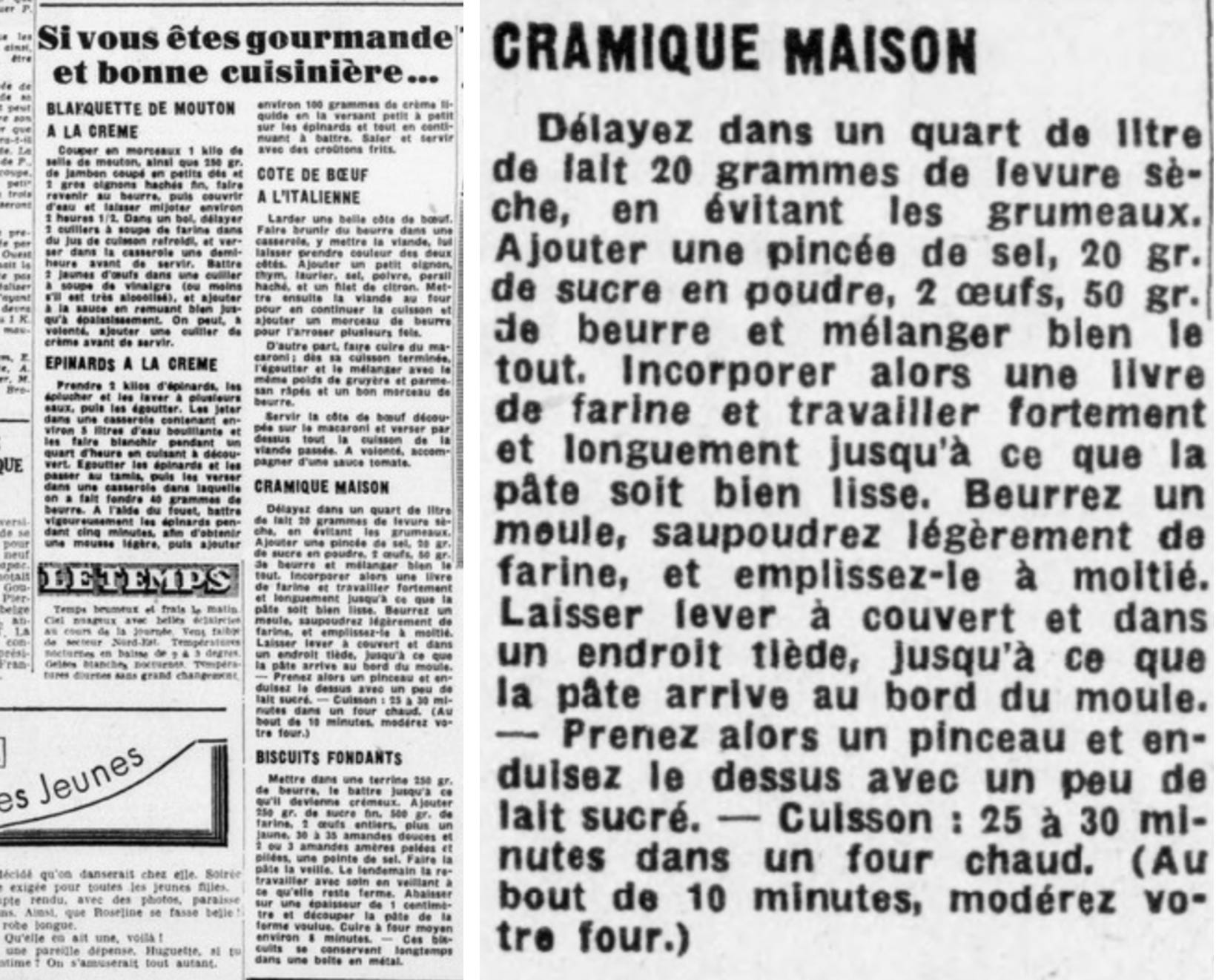
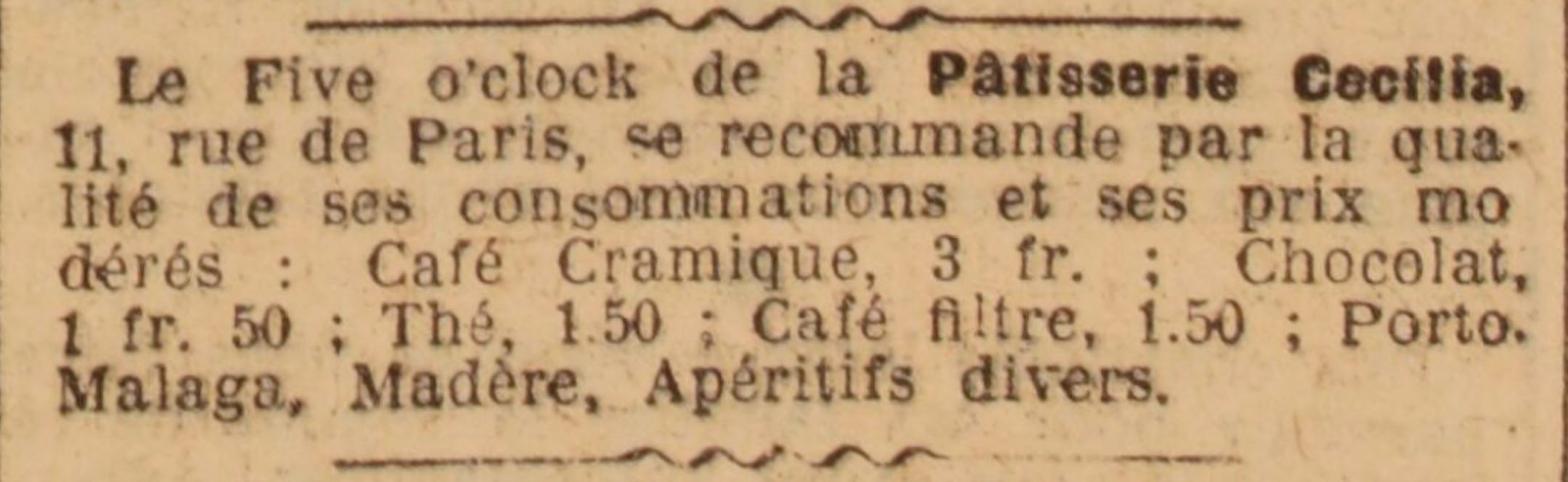
Beyond these obscure texts and references, cramique is little mentioned and rarely found in French books, newspapers, or cookbooks, except in the occasional advertisement for bakeries or eateries in northern France. Urbain Dubois is the odd French man out, including a recipe for cramique in his 1933 La Boulangerie Aujourd’hui (The Bakery Today) under the description “Originally from Belgium, cramique is made in Paris using brioche dough with California raisins added. Fill round cake tins, leave to rise, brown and make two cross-shaped cuts with scissors.”
Foreign observers, by contrast, were quick to label it Belgian, and often more attentive to its cultural role. A telling example appears in the Revue Britannique in 1897, which presents cramique not as a French bread, but as a distinctly Belgian - indeed Flemish - specialty. “In Brussels, on the eve of Three Kings’ Day, all bakers, without exception, distribute cramiques to their customers, weighing between 2 and 5 pounds, depending on the size of each family. Cramique, a fine dough mixed with raisins, is the Flemish cake par excellence.”
I have written about galettes des rois and I have written about the gâteau des rois. As we approach Epiphany, or Three Kings’ Day, I present to you this Belgian, or, as I like to think, Franco-Belgian speciality, the cramique.
But our stomachs were growling with hunger, so we set off in search of an inn. We couldn’t think of anything better than to go to De Kroon, a tavern and community center where we found bread rolls, butter, and cheese for breakfast. But dessert awaited us in the form of a magnificent and appetizing cake, a large cramique. Everyone who was there will remember the travels of this much-desired cramique, and it was certainly not without difficulty that we were able to cut into it. - Bulletins de la Société royale de botanique de Belgique, 1891
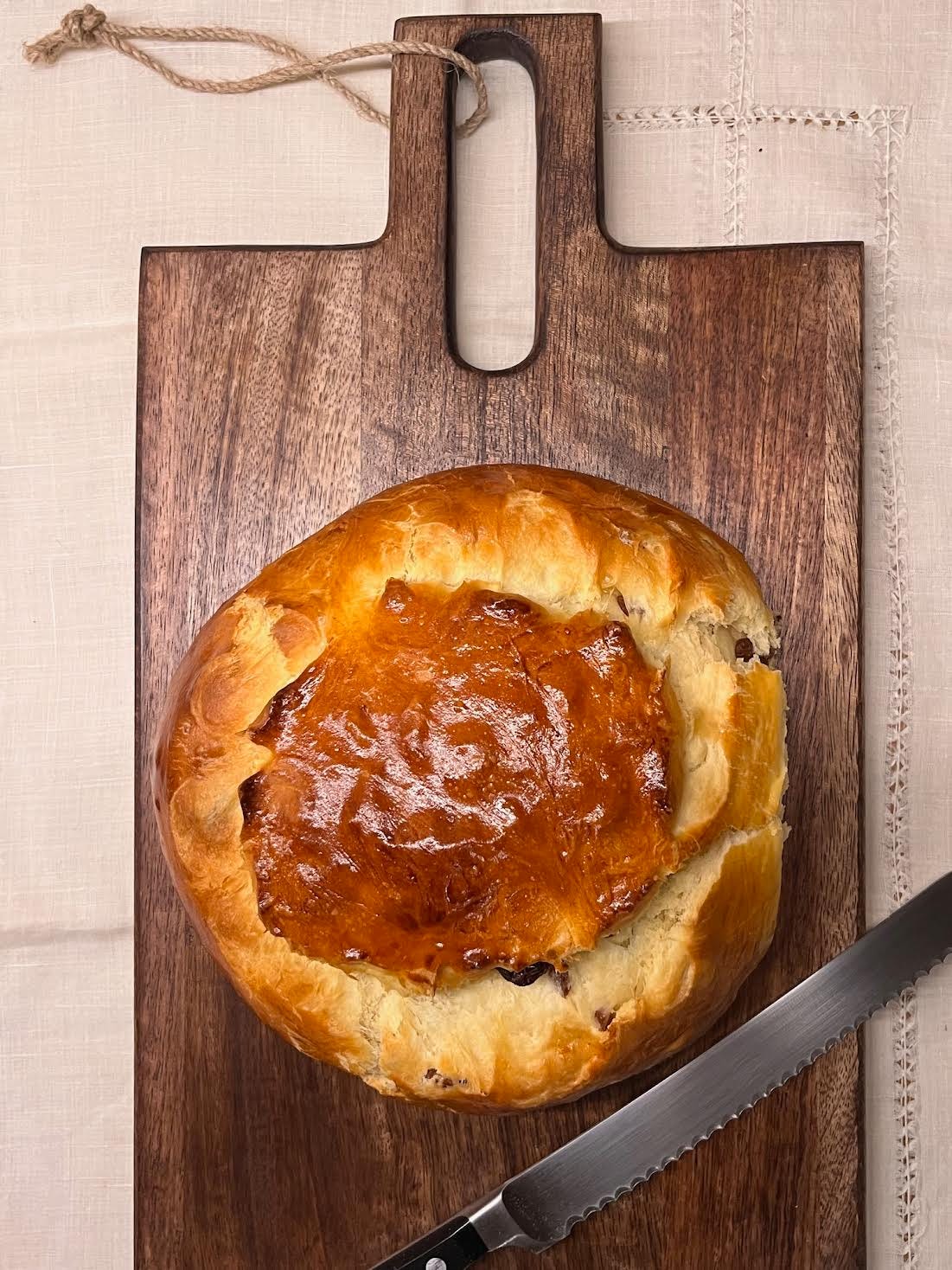
Cramique
For 2 large loaves or 3 smaller loaves
5 tablespoons (75 grams) sugar, divided
2 ¾ teaspoons (8 grams) active dried yeast
¼ cup (65 ml) warm water
3 ½ cups (490/500 grams) flour + up to 1 more cup, as needed
½ teaspoon salt
1 cup (250 ml) warm milk
2 eggs, preferably at room temperature
7 tablespoons (100 grams) unsalted butter, softened to room temperature
Raisins and/or mini chocolate chips, about ½ cup per loaf, or pearl sugar
1 egg yolk + 1 teaspoon milk for glaze
In a small bowl, lightly whisk together 1 teaspoon of the sugar, the dried yeast, and the warm water and let rest until foamy, about 10 minutes.
In a large mixing bowl, whisk together the 3 ½ cups (490/500 grams) flour, the salt, and the rest of the sugar. Make a well in the center.
When the yeast has been allowed to activate, whisk together the warm milk and the 2 eggs and pour into the well in the dry ingredients. Add the foamy yeast water and, using a wooden spoon or a whisk, stir until all of the dry ingredients are wet and the mixture is well blended and fairly smooth. It will be wet. Using a wooden spoon or your hands, fold/stir/knead in enough flour until a smooth, sticky dough is formed (I use about ½ cup/70 grams using soft French flour) ; this will take a few minutes - the dough will be very sticky, a bit wet, and you won’t really be able to handle it easily as a regular dough, but it will hold together so you can move it to a clean bowl to rise (see photos).
Let the dough rest in the bowl 10 minutes then knead in the soft butter in cubes until the butter is completely blended in and the dough is smooth. Again, your dough will be very sticky.
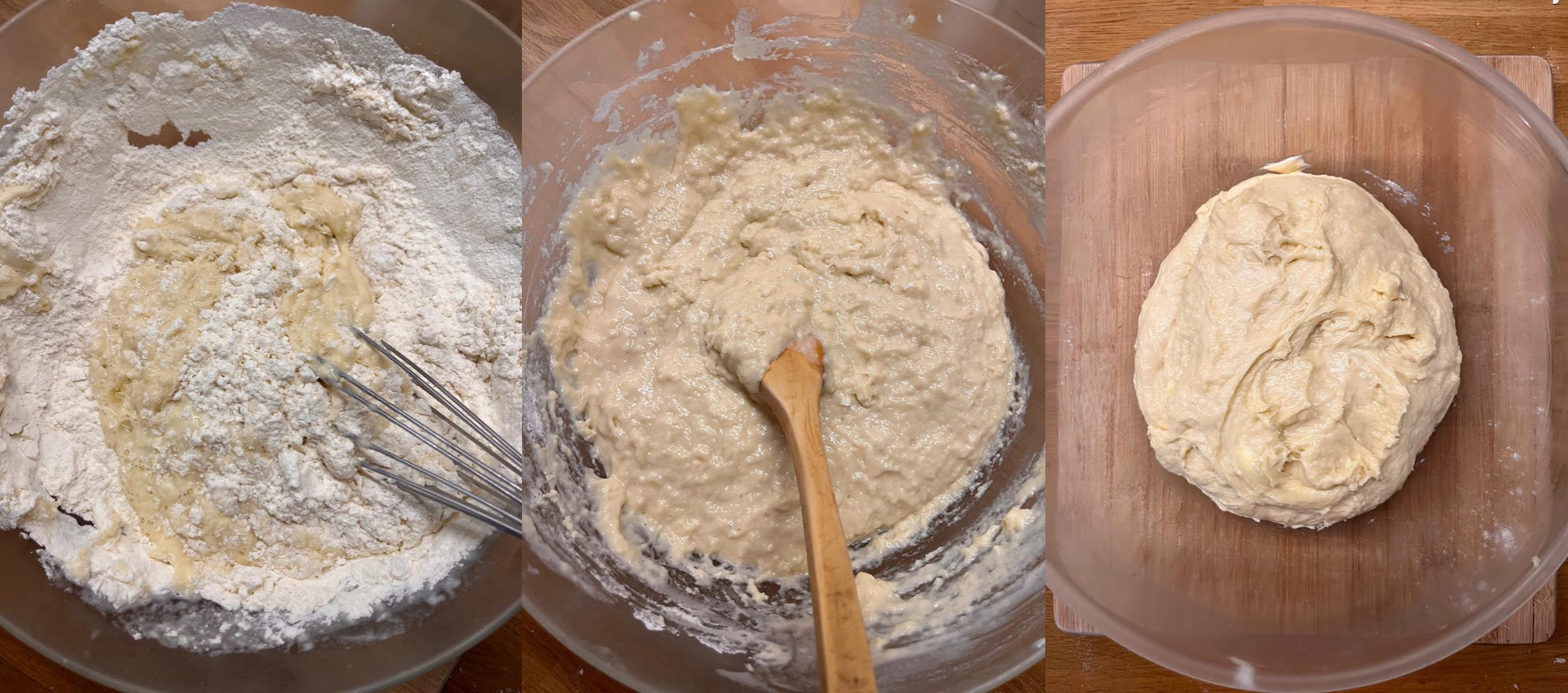
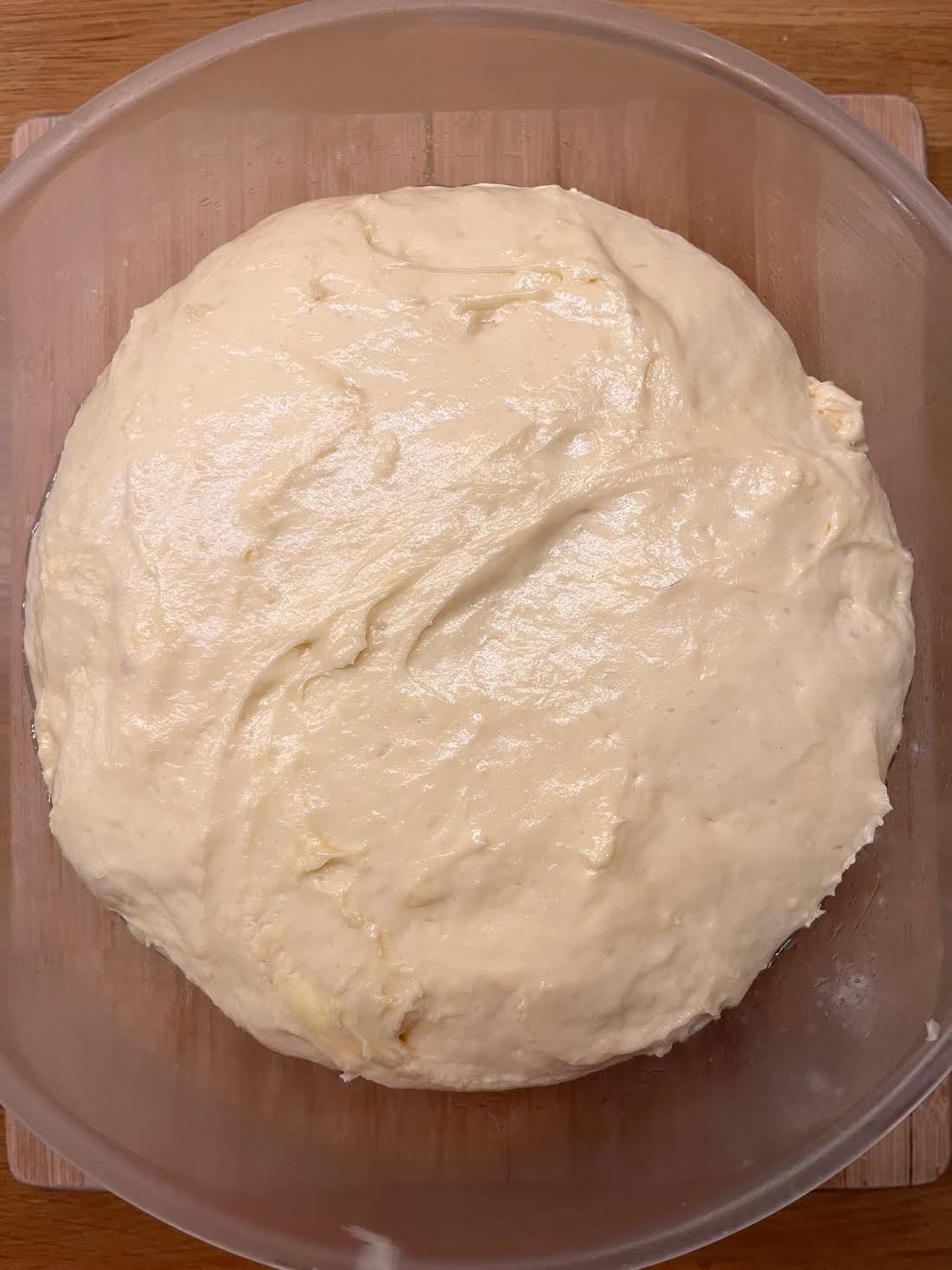
Transfer the ball of dough to a lightly oiled, large mixing bowl, cover with plastic wrap and a clean kitchen towel and allow it to rest at room temperature until doubled in size, about 2 hours.
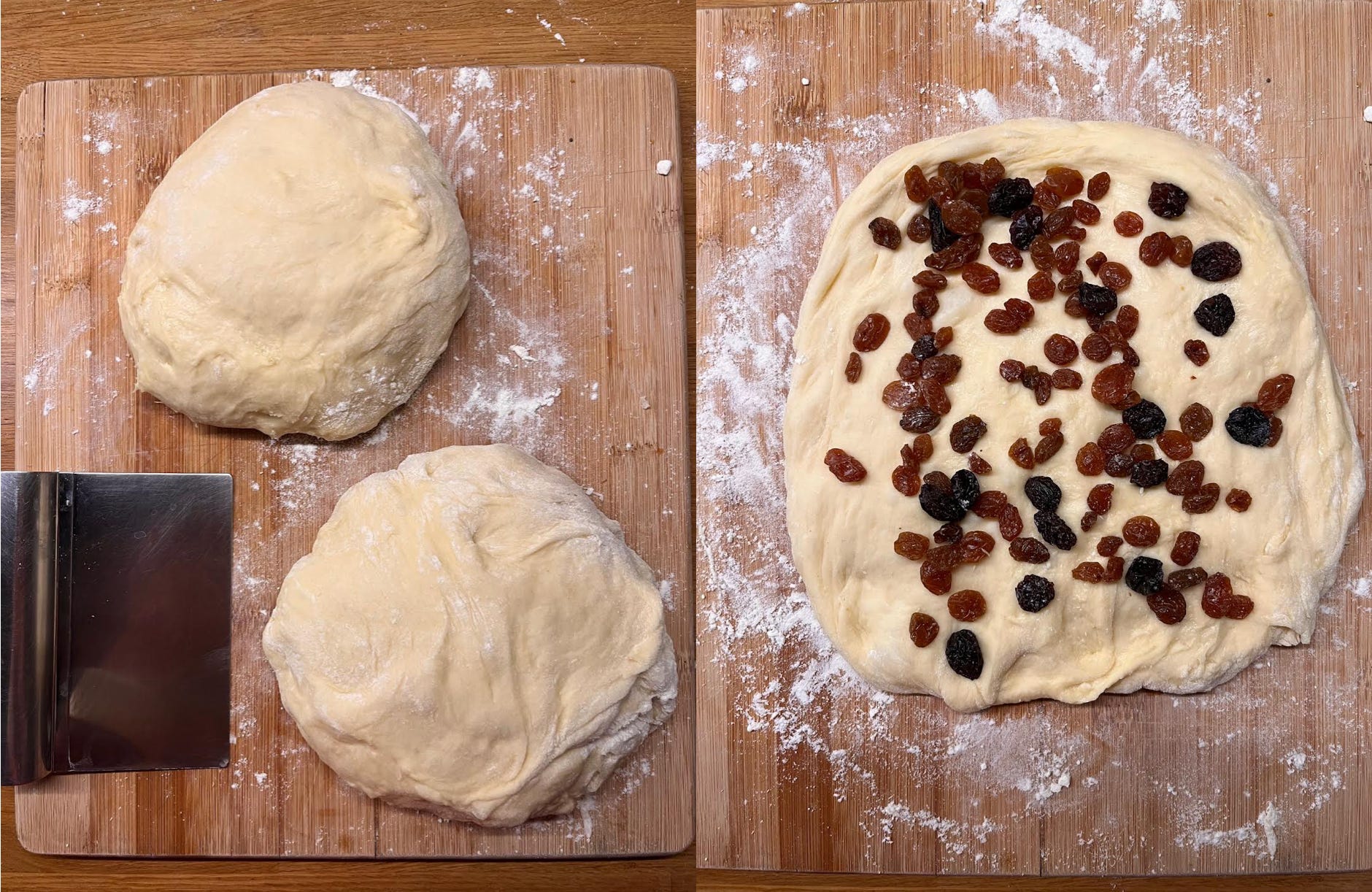
Once the dough has risen, scrape the dough from the bowl onto a floured surface and divide into 2 or 3 equal portions (I use a kitchen scale, but you can eyeball it). The dough does not need to be kneaded. Using a rolling pin or your hands - I pressed the dough out with my fingers - spread each portion of dough out into a round or rectangle. Spread the raisins or chips out over the dough, fold the dough up around the raisins/chips and knead lightly to evenly disperse these ingredients in the dough and shaping each into a round loaf. You’ll want to fold in more raisins or chips than in my photo, more than you think you’ll need because the cramique really swells.
Place the loaves onto a parchment-lined baking sheet, allowing space around each to rise. Lightly cover the loaves with the plastic and kitchen cloth and let rest for about 45 minutes.
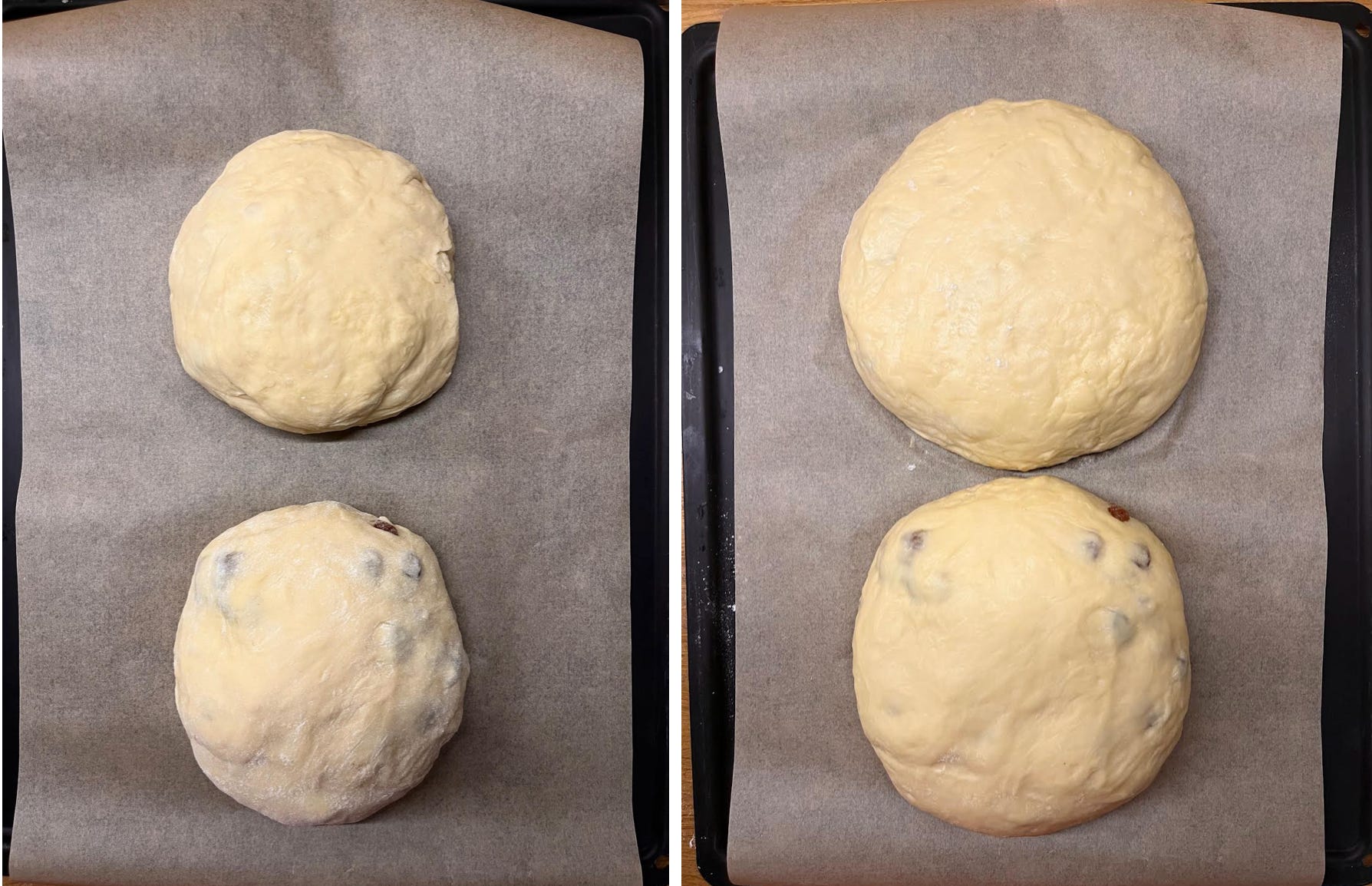
Preheat the oven to 350°F (180°C).
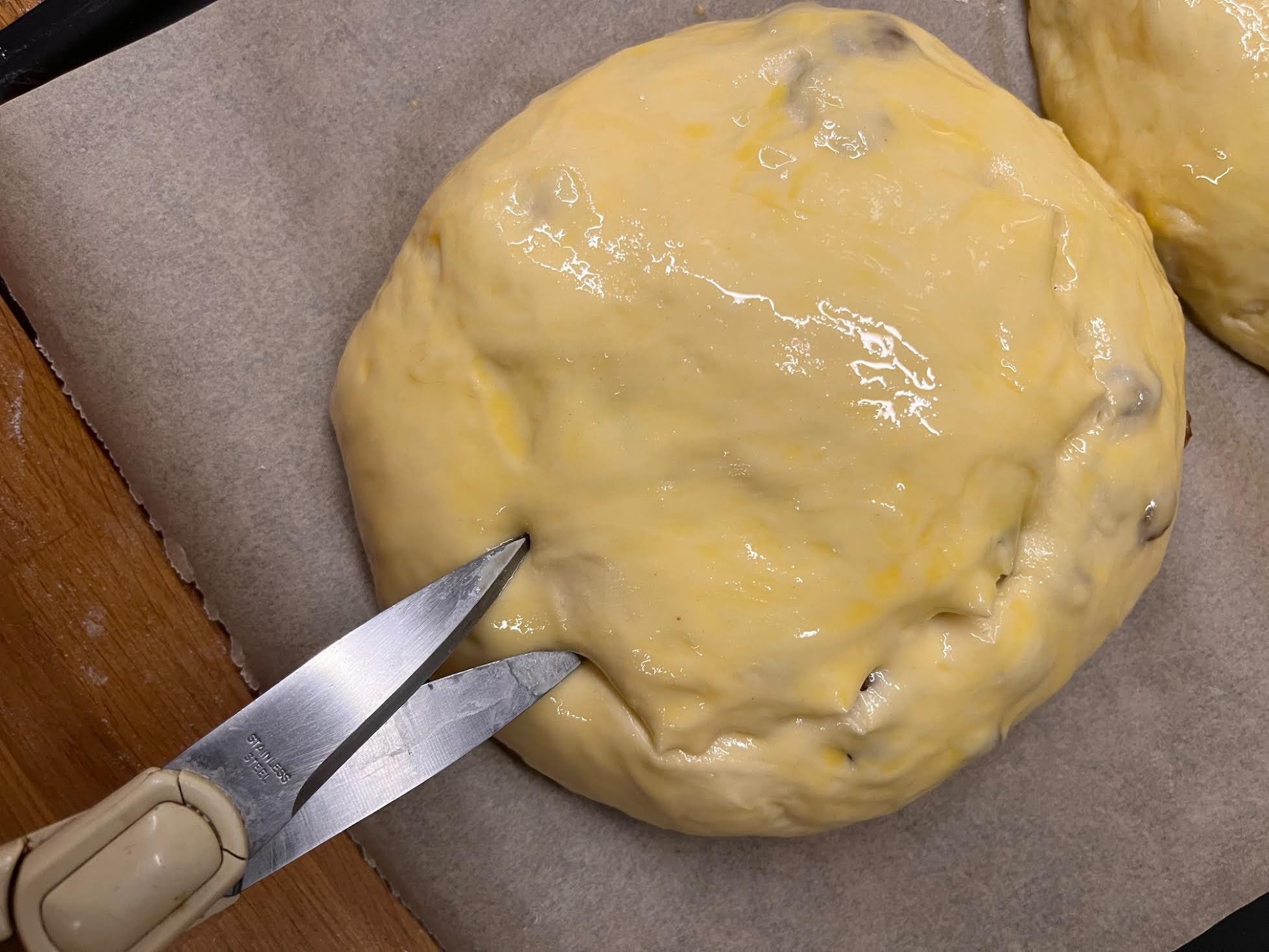
Whisk the egg yolk and milk together until well blended. Uncover the risen loaves and brush fairly generously with the egg wash. Using kitchen scissors, snip into the dough, cutting regularly around the top half perimeter of each loaf, angling the cuts inward and downward, to form a scalloped or star-like design all around the top of the loaf. This is the distinctive mark of the cramique.
Bake the 2 larger loaves in the preheated oven for 30 minutes; the loaves will be well risen and the crust a marvellously deep golden brown. If making 3 smaller loaves, the baking time may or may not change.
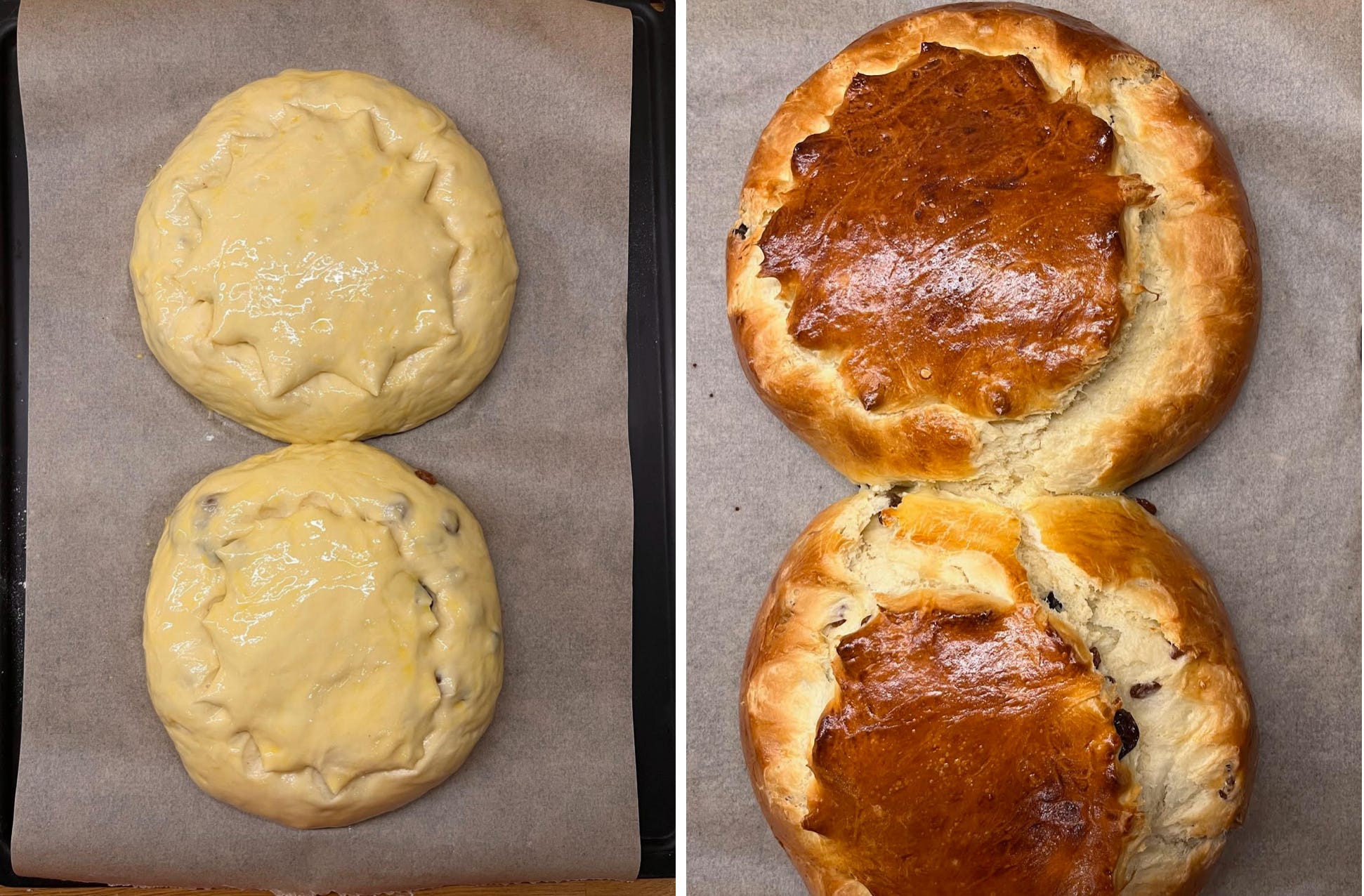
Remove the loaves from the oven and slide each onto a cooling rack.
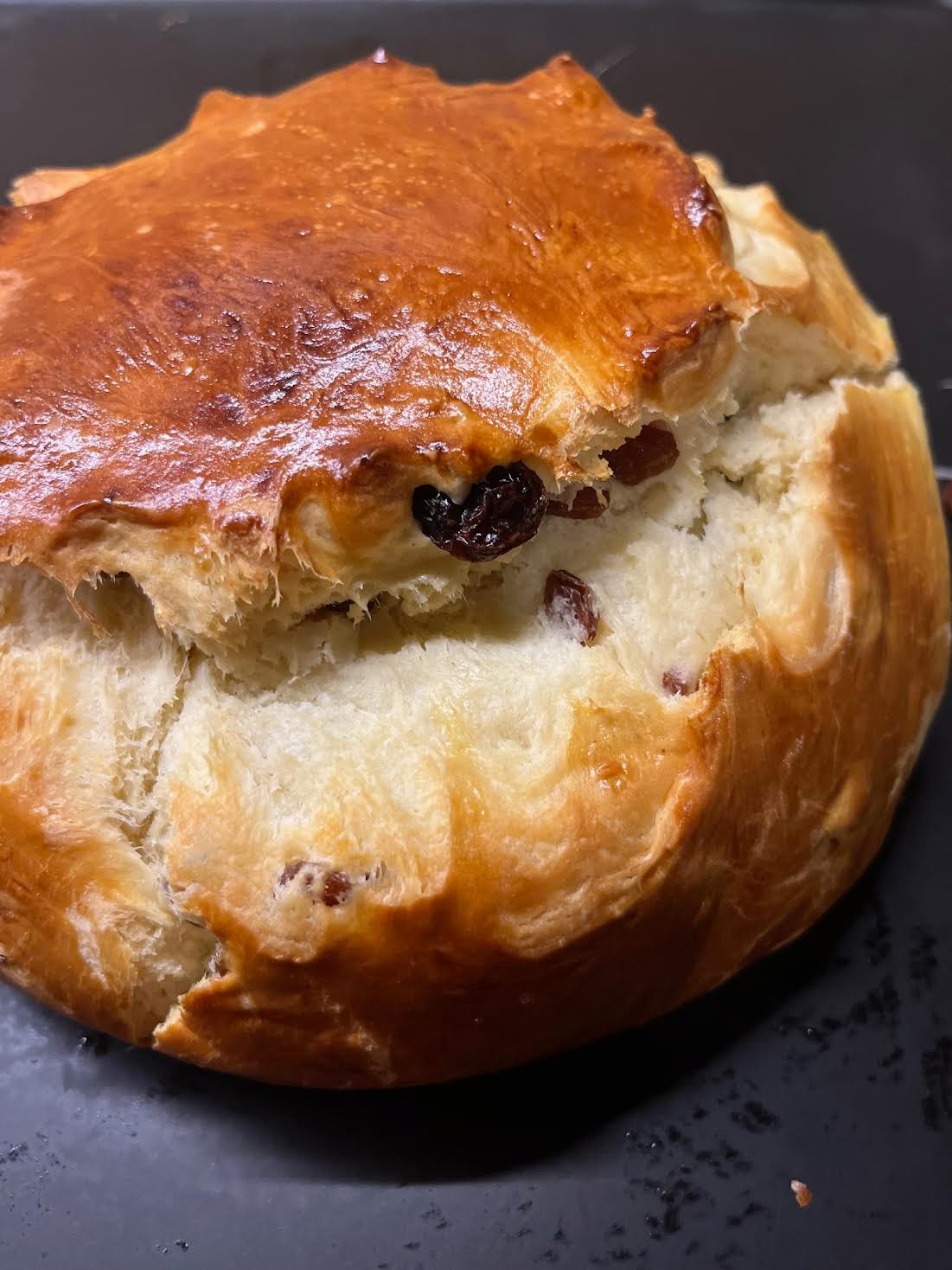
Like any fresh, homemade brioche or enriched bread, the cramiques are best eaten warm and fresh.
If you like, you can omit the raisins and chips and, instead, top each egg-washed loaf with a generous dusting of pearl sugar before baking.
Thank you for reading and subscribing to my Substack Life’s a Feast. Please leave a comment, like and share the post…these are all simple ways you can support my writing and help build this very cool community. If you would like to further support my work and recipes, please consider becoming a paid subscriber.
ezds
Hah! Every time I hear the word "cramique" I think to that scene in the film "Les portes de la gloire" where Michael Duchaussoy is selling encyclopedias door to door and tells a woman that the Aztecs invented le "cramique, un petit pain sucré avec des raisins, c'est délicieux" and the woman says "C'est la céramique." That scene has become an in-joke in our household. https://youtu.be/wYKop7oqvHM?si=X4jjq-RtMSXRx7hS
How fun and something new to try. Happy New Year